Putting the “Eki” in Ekibentō
This project is not about the entire history of Japanese railways and how they work—for that is the topic of dozens of long books written by engineers, economists, and ferroequinologists alike. However, the exploration of ekiben and its positioning against rapid modernization would not feel properly contextualized without a brief overview of the rise, fall, and rise again of train networks throughout Japan. This section traces a short introduction of train travel, how it began to involve foodways, and the shift from local networks to high-speed rail. Thus, let us rewind to 19th- and 20th-century Tokyo.
Full Steam Ahead: Japan’s First Train (and Train Food?)
After two decades of locomotive education and manufacturing, incited by the sakoku-ending Treaty of Kanagawa (1853) and collaborations with Western engineers, Japan’s cardinal rail line debuted on October 14, 1872 (Figure 1.1). This 23.8-kilometer line, now a segment of the modern-day Tokaido Main Line, connected Tokyo to Yokohama, with third-class ticket prices starting at today’s equivalent of $50. (In 2020, Japan’s entire train network spanned over 30,000 kilometers; about 3,000 kilometers were dedicated to high-speed shinkansen [Highlighting Japan 2026: 6].) The grand opening at the Minato ward’s Shimbashi Station brought in the likes of Inoue Masaru (Japan’s first director of railways), foreign dignitaries, and 19-year-old Emperor Meiji, who, along with his state ministers, wrote traditional samurai clothing, “which seemed out of step with a ceremony focused on modernization” (Atsushi 2022; Figure 1.2).
This was a reflective omen of sorts: The long-standing feudal systems of Japan were facing the unavoidable, industrial future that came with breaking isolation and negotiating with the West. A similar comparison can be made with consuming traditional ekiben on state-of-the-art bullet trains—but in that case, could opposites attract? Come the bubble economy of the 1980s, the washoku lifestyle of Japanese gastronomy would live in harmony with the rise of technological advancements. Washoku literally means “Japanese food,” but it has since become popularly associated with the blending seasonal ingredients and traditional presentation methods that are unique to Japan (Cang 2019: 509-510; Cwiertka 2018: 102). More on that later.
With the rise of railway transportation during the Meiji era, other services boomed: Porters, money-exchange operations, newspaper stands, and restaurants were readily available near stations (Noguchi 1994: 320). The early days of train travel were without dining cars, so passengers turned to bentō-carrying peddlers or stalls for sustenance (Figure 1.2). The first ekiben, which comprised of two umeboshi (pickled plum) onigiri wrapped in bamboo leaf, were sold in 1885 at Utsunomiya Station for five sen (ibid; Hani 2003; Figure 1.3). I further explore the origin of ekiben and how both its appearance and cultural impact have expanded over 140 years in the Good Things Come in Small Packages section.
Over the next few decades, the train network was expanded domestically to connect other major cities with one another (such as the Kobe-Osaka and Kyoto-Otsu lines) and further develop those already constructed (Tokyo and Yokohama). In 1912—the same year the Taishō era began after the death of Emperor Meiji—samurai-turned-Bureau of Railways president Count Gotō Shōjirō proposed a new standard-gauge shinkansen, translating to “new trunk line,” between Tokyo and Fukuoka (Thuong 1982: 27). In my research, this was one of the first recorded mentions of shinkansen development—and the desire to make faster, safer locomotives continued on well through WWII and American occupation. Furthermore, connecting the capital with the port city in closest proximity to Korea and continental Asia would have been pivotal, both for trade and imperialistic goals of the early Shōwa era. Japan had plans to build multiple train networks in Korea and Manchuria after respective invasions. Alas, while some of the line was constructed, it was suspended during WWI and eventually halted all together by the 1929 Depression (ibid). The scope of Japan’s railways by the end of WWI is shown in a circa-1918 antique map produced by Toppan Printing Company (Figure 1.5).
Trains, Derailed: Earthquakes, War, Food Shortages, and “Kotsu Jigoku”
The Great Kanto Earthquake and Fire of 1923 changed how Japanese people traveled and ate almost overnight. Food journalist and culinary historian Lucy Seligman posits “public transportation, such as national railways, developed rapidly in the wake of the earthquake’s devastation” (1994: 173). Small shops transitioned from serving sit-down meals before a train’s departure to offering takeaway bento with regional ingredients, so passengers could travel without carrying large quantities of food. These bentos are the earliest “standardized” versions of the ekiben we see today. (An ekiben’s north star is the regionality or seasonality of its ingredients. I explore this in depth in the section Terroir on the Tracks.)
Across the 1929 Depression, the invasion of Manchuria, the Pacific War of 1941, and WWII, the contents of ekiben—and bentos in general, from those brought to school by children to boxes packed for military officers abroad—were reflective of food shortages and rationing. Young rice farmers were sent to work at military factories, resulting in the eventual fall of rice production (Seligman 173). One-hundred-percent white rice ekiben were replaced by udon, pumpkin, daikon, or sugar-rich sweet potato, either cut into squares or mixed with a bit of grains (Seligman ibid). Price-setting and food stamps were soon implemented, and commodities like sugar, salt, miso, and shoyu could only be bought with food stamps. People nicknamed this end-of-war period, from 1940-1944, “takenoko seikatsu,” or a bamboo shoot way of life, as they shed layers of clothing in exchange for sustenance, similar to how a young bamboo shoot removes its outer layers of skin one after another (Kirk 2015; Seligman 173; Figure 1.6).
Though some ekiben were still distributed at surviving train stations, they were a sad, riceless affair: In his framework text, Paul Noguchi references Japanese scholars, who reported then-passengers described wartime ekiben as “ikameshi,” or solemn, in appearance (Noguchi 1994: 320-321; Kawaguchi and Hayashi 1990: 191). And by the end of 1944, “railway stations were in ruins from air raids and ekiben momentarily disappeared,” explains Noguchi (ibid).
After WWII, Japan’s railway system—along with most of its operational society—was first under the jurisdiction of the Supreme Commander of the Allied Forces (SCAF). In 1949, Japan’s National Railway (JNR) transitioned into a statutory public corporation, both for legal reasons and response to postwar labor unrest deemed by SCAF (Thuong 22). In a series of meetings held to discuss the reevaluation of the country’s train network, it was recorded that a foreign participant lamented about the lack of food available for snacking: “Why don’t you hold the next meeting in a place where there is plenty of food?” (Shimomae 2022: 13). The irony of simultaneous food shortage and rapid reconstruction efforts were not lost upon attendees. But under SCAF, the infrastructural problems of train networks were in dire straits. “The condition of the railroad system deteriorated to a point that the Japanese referred to it as a ‘kotsu jigoku’ or transportation hell,” writes Thuong (ibid). While ekiben had returned to train cars by 1955, safety and efficiency had not. To upgrade the transportation system, SCAF gave JNR full authority, resulting in additions of electrification, dual tracks, and portions of the Tokaido line to link the populous metropolises of Tokyo and Osaka (Nickelsburg et al. 2020: 270).
UCLA Anderson Forecast economists report that most countries opt to build high-speed rail to offer an alternative to highway or airport infrastructure, more convenience, or cleaner transportation (ibid: 268). A less heard, but equally important, reason is “the logic that led to the first major high-speed rail line, the Tokaido line in Japan: that of easing congestion and improving commuting in large urban centers” (ibid). Now able to connect Tokyo to Osaka by the 1950s, the Tokaido line had reached full capacity—imagine hordes of people congregated at stations, waiting to board train cars and be packed like sardines (Figure 1.7). It is a similar effect to the viral videos of rush hour boardings of Shinjuku Station nowadays, except the trains were much less safe. The Tokaido line “proved to be a bottleneck despite completion of the line’s electrification,” as it served a corridor with 30 percent of the nation’s population (Thuong 22; Nickelsburg et al. 270). The JNR Planning Board reported some line sections experienced up to 130 trains a day—in each direction (ibid). “Meeting this demand for rail service was quite urgent, and failure to do so would mean taxing the Tokaido corridor to its capacity. At best, disastrous traffic accidents were bound to happen, and at worst, the nation’s economy was going to be stagnated by transport insufficiency,” (ibid).
Striking Gold: The Shinkansen Debuts Ahead of 1964 Olympics
In 1958, JNR and government officials met in a panel to study the reported congestion issues and promptly recommended the replacement of the Tokaido line (ibid). In its place would be a high-speed rail, called the shinkansen, to expand corridor capacity and institute economic growth. The plan was approved by the Japanese Diet within a few months and construction began in 1959. “While the objective of the Tokaido line was to relieve pressure on an overcrowded railway system…it was its potential as a relief valve for crowded conditions in Tokyo, through a reduction in the cost of commuting from outlying villages and cities, which secured final approval by the government” (ibid).
On October 1, 1964, days before the Olympic Games in Tokyo, passengers boarded the shinkansen that connected the capital to Nagoya and Osaka (Figures 1.8-10). Simultaneously with the debut of the bullet train, the national economy was surging under the “double your income” plan by Prime Minister Hayato Ikeda (Hood 2006: 214). Within just two years of service, the Tokaido shinkansen generated profit; it reached a 56-percent margin by 1970 (Thuong 27). Later that year, the Law for Construction of Nationwide High-Speed Railways was passed, calling for another 7,200 kilometers of train lines by 1990 (ibid). By 2004, the Sanyo, Tohoku, Joetsu, Hokaruku, and Kyushu lines were completed—and most of Japan’s cities were linked through the world’s largest high-speed rail network (Nickelsburg et al. 270-271).
As train cars were built and tracks were laid over time, the Japanese economy began to recover and then boom. The relationship with food (both for sustenance and enjoyment) was healing. “Instant foods, along with frozen foods, pouch foods, and processed foods, flourished, partly because of the emergence of super-markets. Vending machines selling soft drinks and alcohol became commonplace. By the 1970s and 1980s, Japan was fully recovered from the postwar slump, had a higher standard of living, and had become a completely consumer oriented,” writes Seligman (173). In 1889, the journey between Tokyo and Osaka took 16.5 hours by train; by 1964, it took only three hours and 10 minutes (Jones 2024). It is estimated over 295 million passengers road the shinkansen in 2022 (ibid; Figure 1.11).
A leading western scholar in shinkansen culture, Christopher Hood says the original transformation of the Tokaido line was the premier step in creating a wide network of high-speed rail lines that connected almost every major Japanese city (2006: 211). “In over 40 years of operation, the shinkansen has become synonymous with high-speed, punctuality, and safe transport,” writes Hood (ibid). But is Japan’s expansive rail network—from rural lines to the 200-mph shinkansen—merely a symbol of development and economic recuperation? Can we use it a lens to analyze ekiben’s role in highlighting modernity, while also promoting heritage?
I believe that high-speed rail can symbolize the very ekiben you can eat onboard: they are both convenient and plentiful, culturally connect their passengers with faraway prefectures, and are wholly unique to Japan. Spanning over 30,000 kilometers of total train networks, Japanese commuters and tourists alike can eat over 4,000 types of ekiben. The country experienced mass food shortages while its train lines were established, reconstructed, and modernized for high-speed abilities and politico-economic recovery… and now these trains not only bring someone from point A to point B, but act as third spaces for cultural consumption and appreciation.
The comparative of ekiben and train networks is natural and never farfetched, as seen in Noguchi’s thesis and main takeaway of “Savor Slowly,” a text that acts as an important—if not paramount—framework for my project:
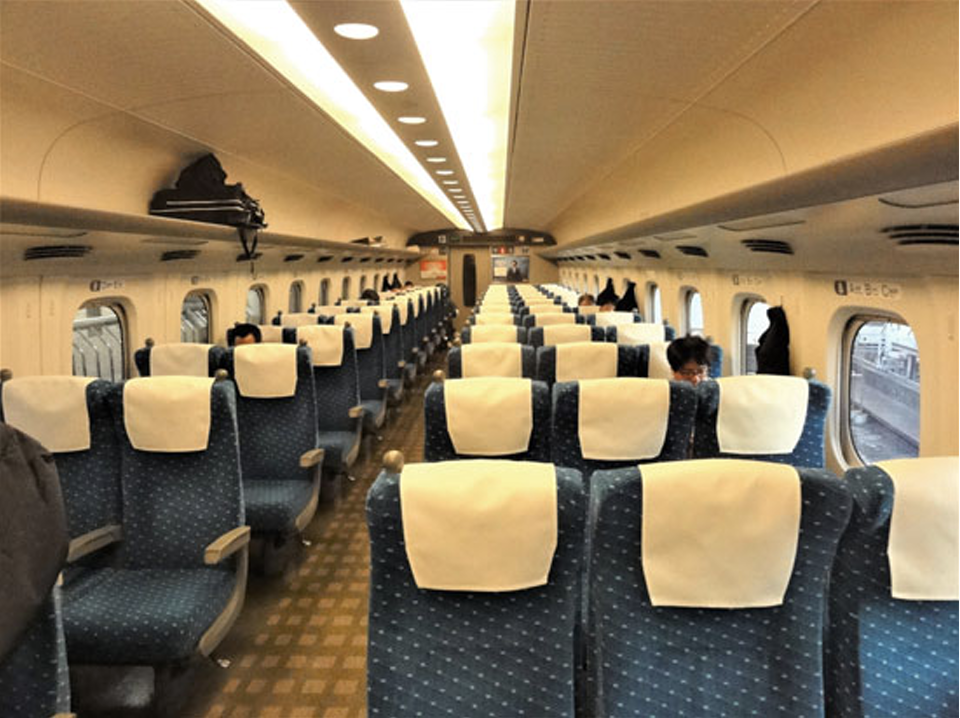
Inside seating of a standard class shinkansen (Shimomae 2022: 274).
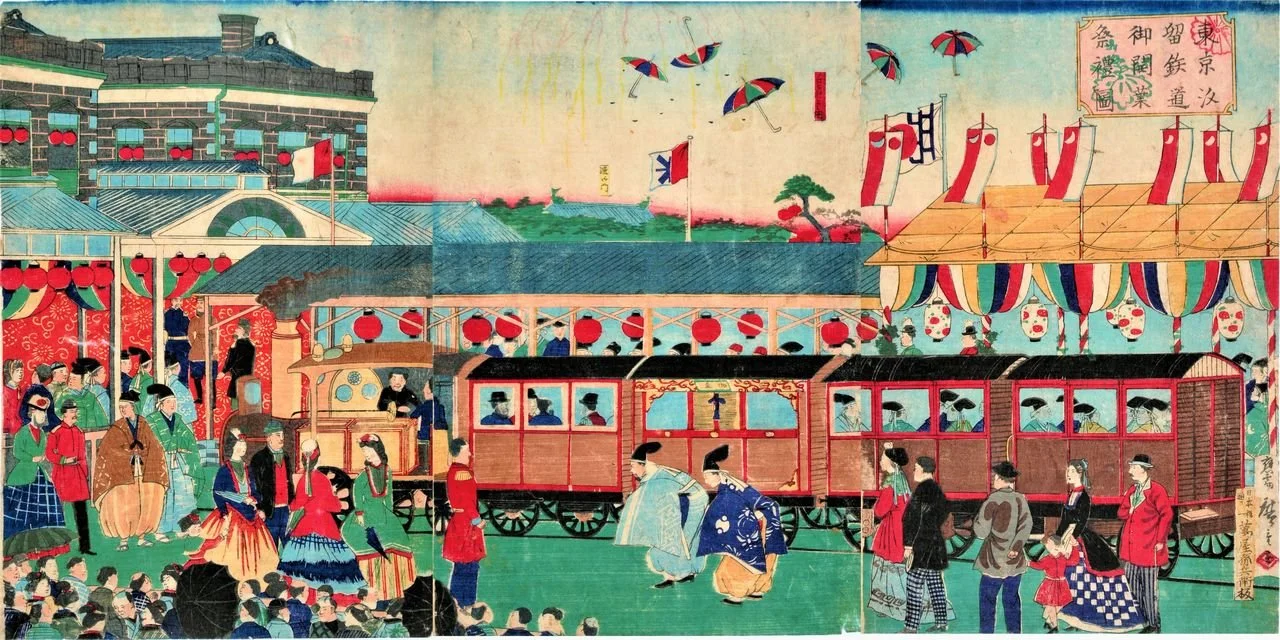
Figure 1.1 A 1872 print by Utagawa Hiroshige III depicting Japan’s first rail service from Tokyo to Yokohama. Lavenberg Collection of Japanese Prints.
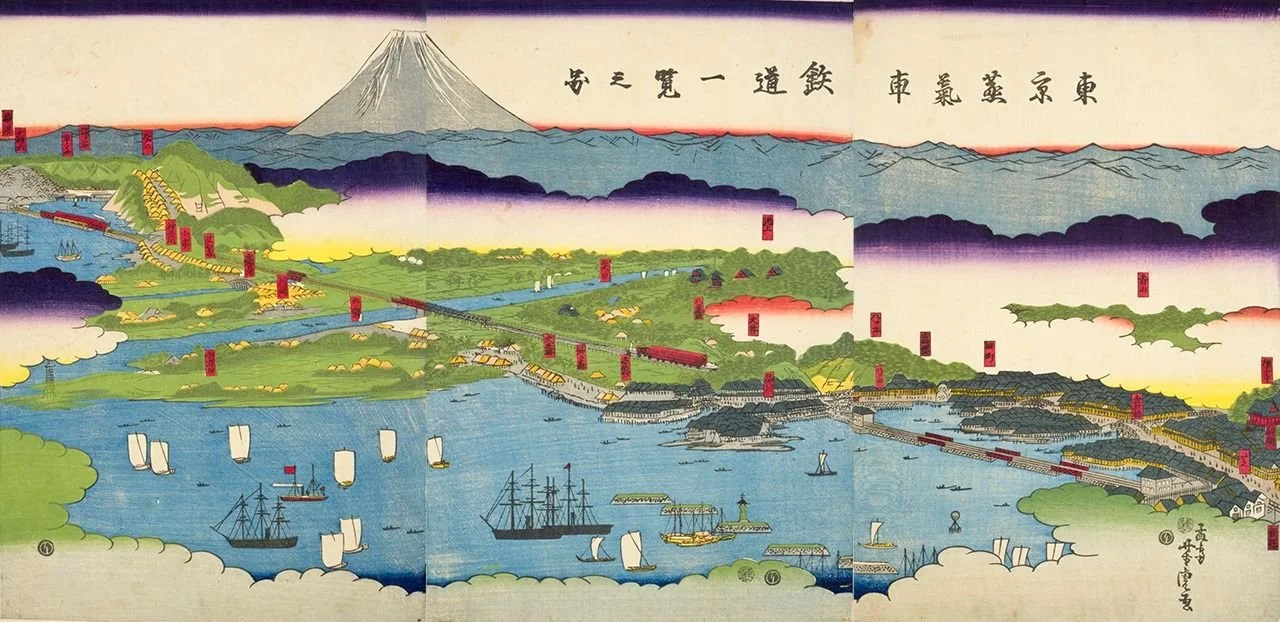
Figure 1.1 Rendering of the Tokyo railway by Mōsai Yoshitora, printed in 1871. Courtesy of National Diet Library, accessed by Museum of Logistics.
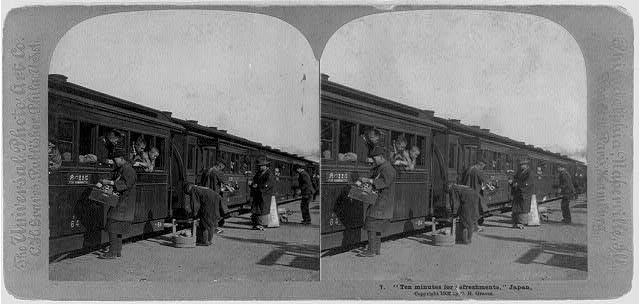
Figure 1.3 1902 stereograph by C.H. Graves of train passengers in Japan being served refreshments. Courtesy of Library of Congress.
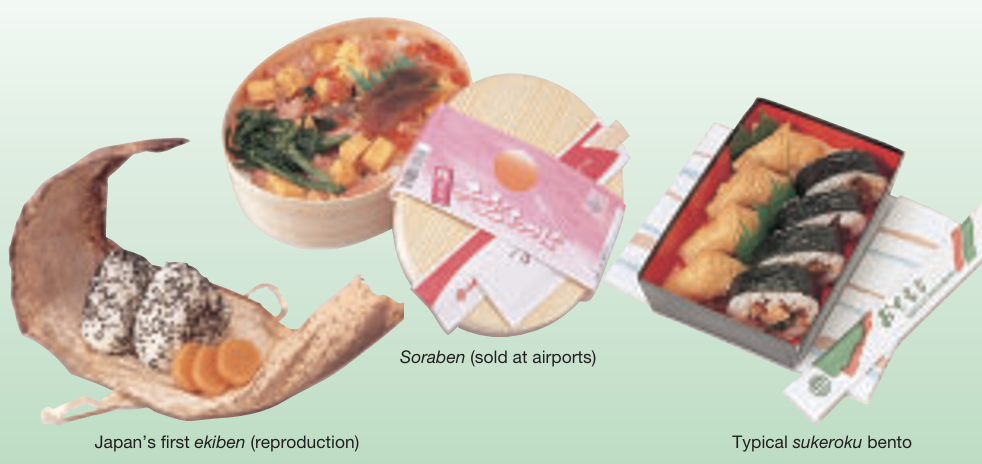
Figure 1.4 Recreation of the first ekiben, which contained two umeboshi onigiri with pickled vegetables. Courtesy of Kikkoman.
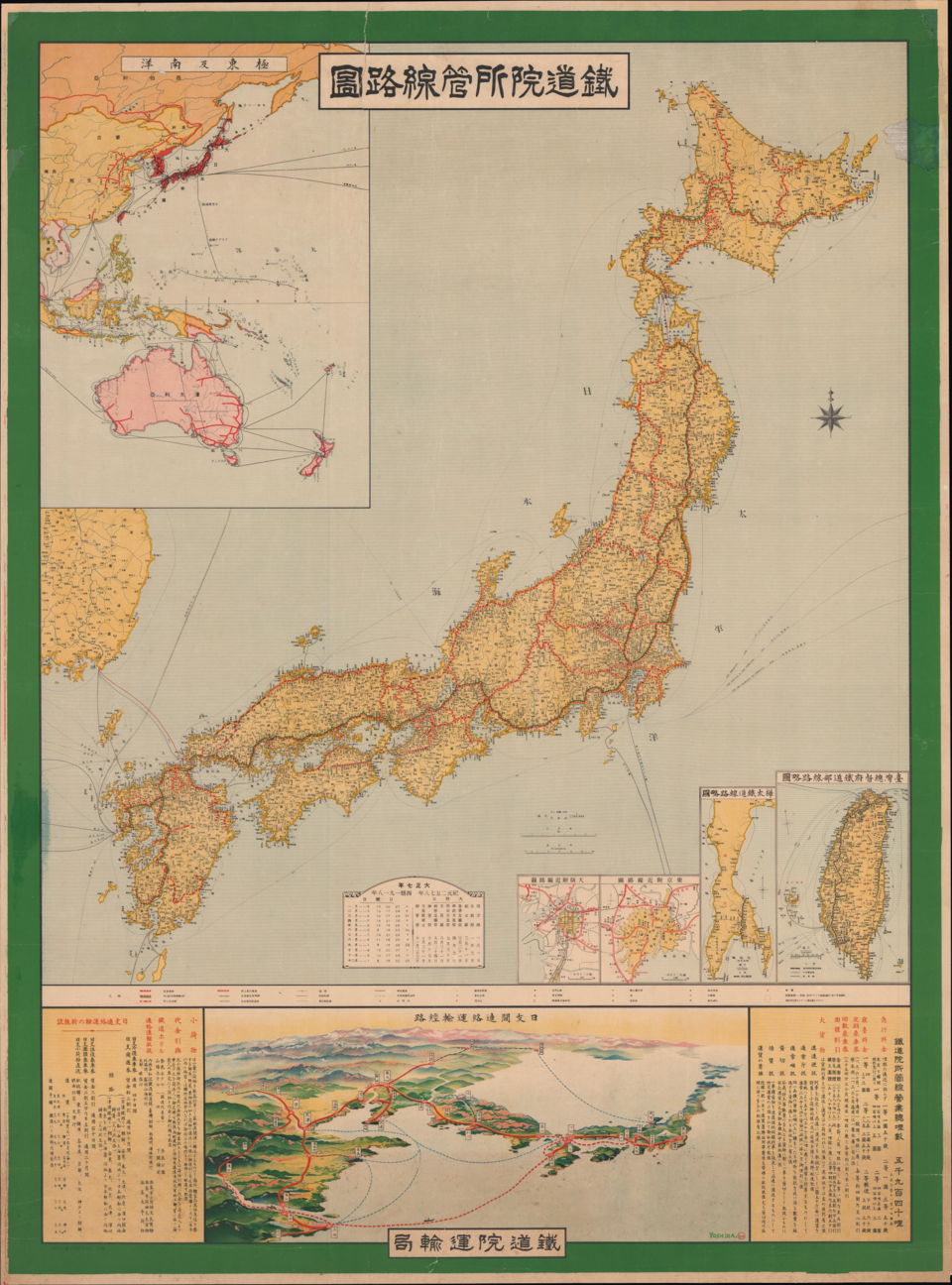
Figure 1.5 Antique map by Toppan Mapping Co. of Japan’s train network by 1918. Courtesy of Geographicus.
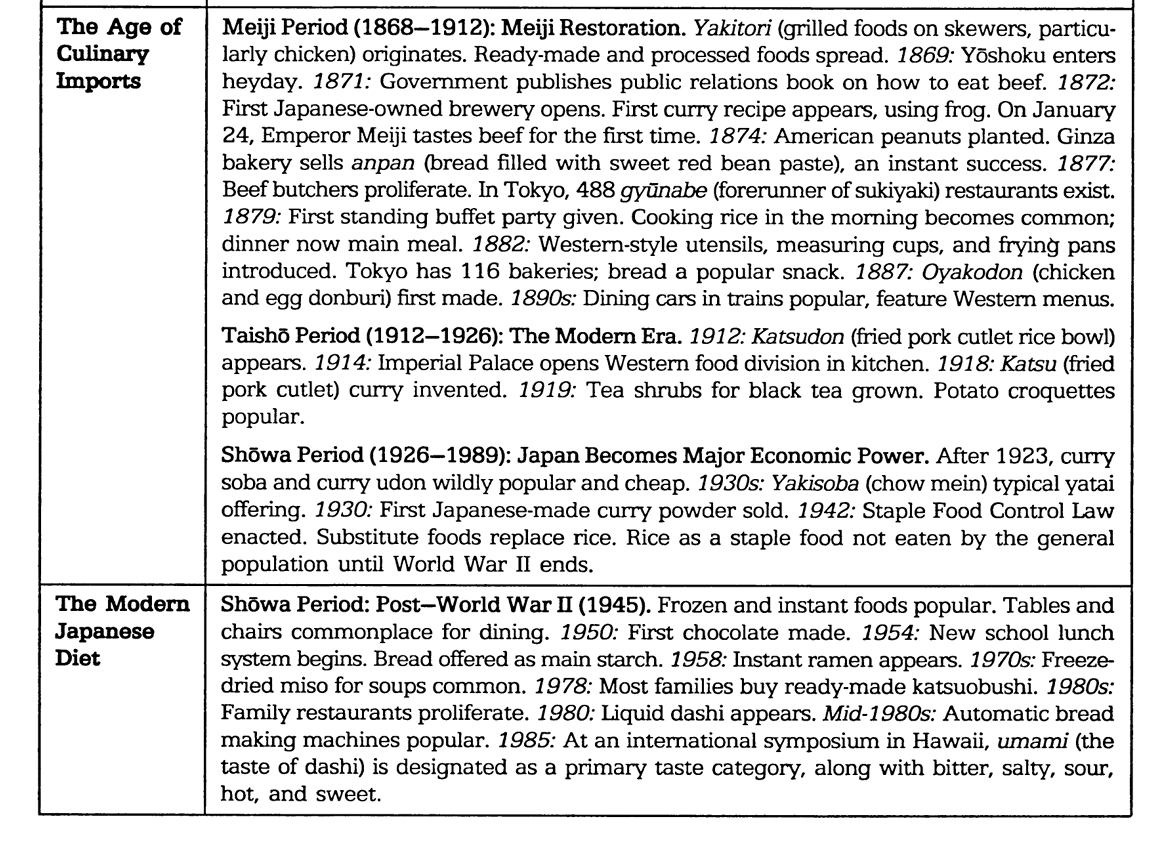
Figure 1.6 A chart tracing the Japanese diet from the Meiji Period (birth of trains) to the Showa Period (post-WWII “transportation hell”). Chart by Lucy Seligman (1994: 176).
Figure 1.7 Archival footage of the congestion of boarding trains in Tokyo in the early 1960s. Courtesy of archive film agency Kinolibrary.
Accidents did in fact happen. In May 1962, two passenger trains collided with a freight train in the suburbs of Tokyo and resulted in the deaths of 160 people; a year later in Tsurumi, a similar issue occurred and 161 passengers died (Hood 2006: 214). Although Western-style road and air travel were geared up to replace trains as the main source of transportation at this time, JNR executives made the case for a passenger-only high-speed rail line to aid with congestion issues and get people across the country faster (Nickelsburg et al. 270; Shimomae xi). And thus the shinkansen was born.
Figure 1.8 Archival promotion of the launch of Japan’s first shinkansen line in 1964. Courtesy of newsreel/documentary firm British Pathé.
Figure 1.9 Archival footage of what it was like onboard Japan’s first Tokaido shinkansen line. Courtesy of Aylon Film Archives.
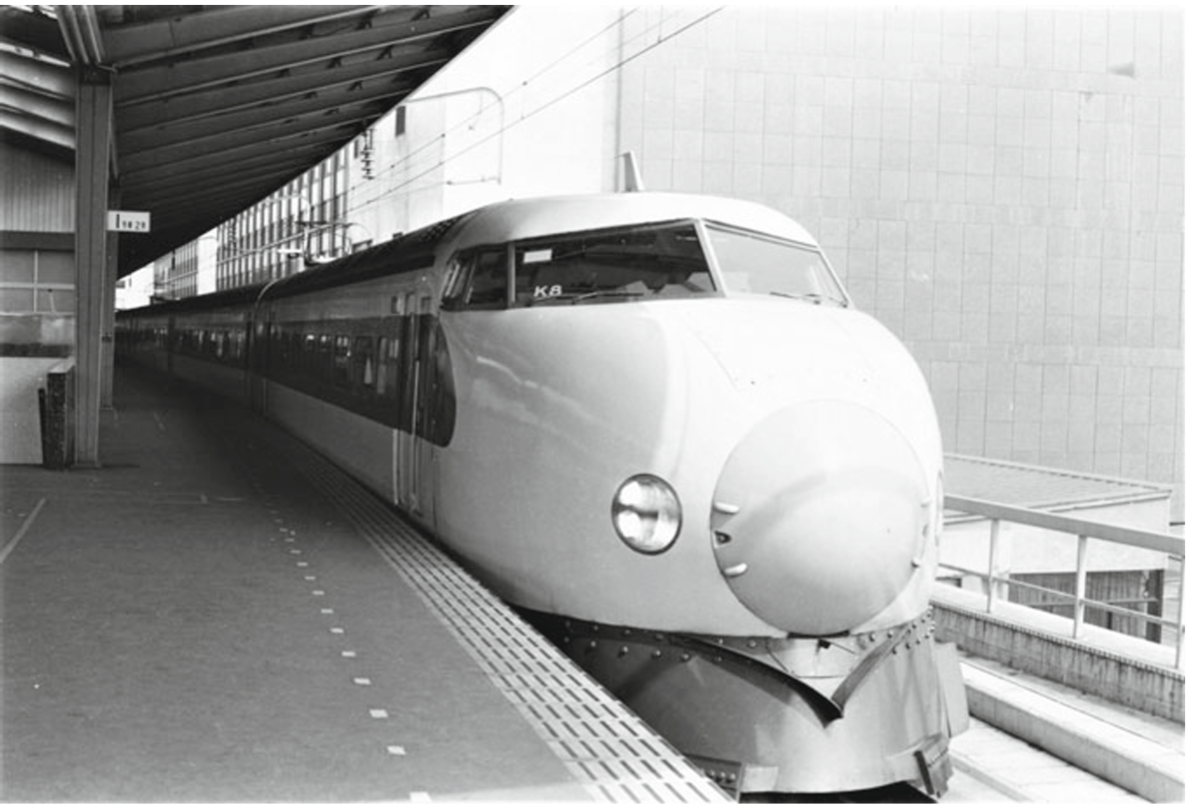
Figure 1.10 Series 0 twelve-car shinkansen about to open for business, Tokyo station in 1964. Courtesy of RTRI, accessed by Shimomae 2022: x.
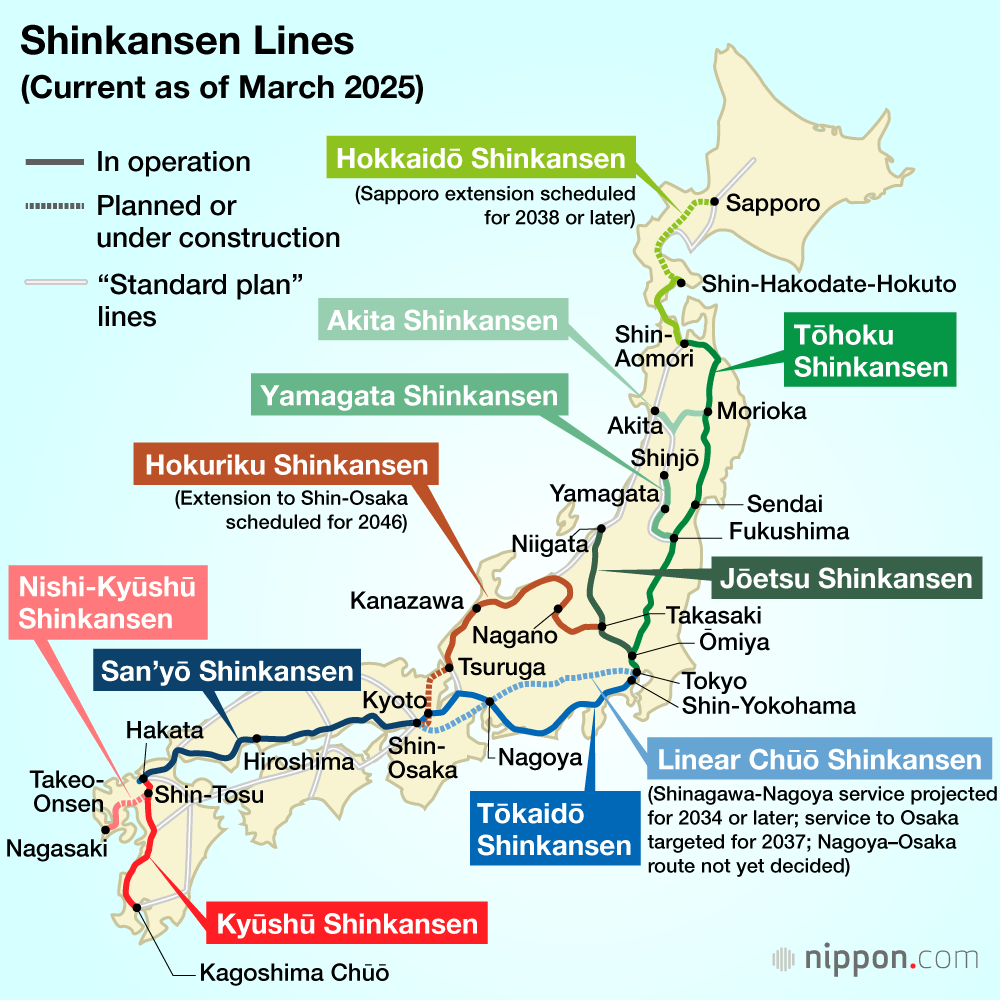
Figure 1.11 Japan’s shinkansen network by March 2025. Courtesy of Nippon.com.
“The association of ekiben with trains extends over a hundred years. In no other modern society does a particular type of cuisine so intimately associate with trains. Ekiben are marked with a significance beyond the pragmatic. They help lend order to the lives of Japanese people and help identify who they are. Ekiben have the capacity to unite disparate phenomena and to condense objects (trains and train stations with boxed containers), relationships (people with each other and with regions), and ideas (people with time and nature). They are utterances about the presentation of people, technology, time, place, and nature emanating from a portable container” (1994: 318)
In the following section, I briefly present the history of ekiben and explore how its expansion from simple craft-service fare to a regional phenomenon proves that food is at the crossroads of modernity and traditionalism in Japan.
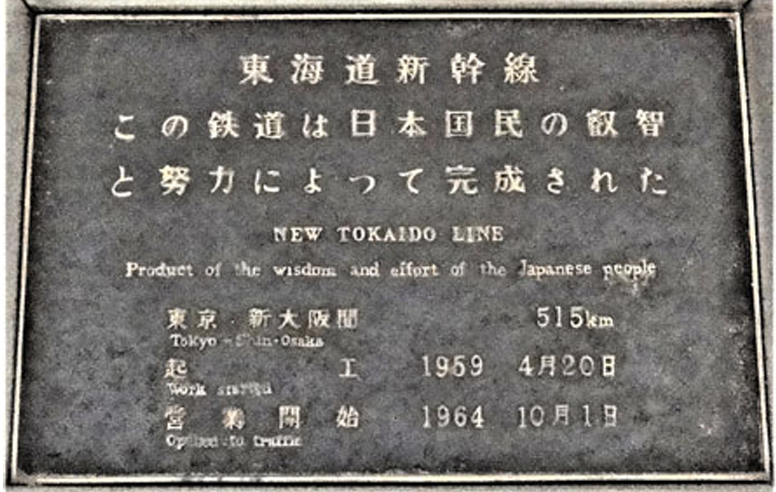
Commemorative plaque at Tokyo Station, reading “New Tokaido Line: Product of the wisdom and effort of the Japanese people” (Shimomae 2022: 292).