Good Things Come in Small Packages
“Japan savors its culinary traditions, whether indigenous, adapted, or borrowed, and these traditions are the roots of a cuisine that delight the senses,” writes Seligman (1994: 165). One such tradition—the ekiben—is a prime example of a coveted food item that has adapted to the rising modernism and industrialization of Japan, while preserving the very agriculture and gastronomic pride is represents in each package. What once started as a simple onigiri wrapped in bamboo leaf has since snowballed into a food production sector that represents seasonality, agriculture, tourism, convenience, and capitalization of pop culture. Naturally, like all aspects of “tradition,” food culture constantly evolves to current society (Bestor and Bestor 2011: 14).
In this section I shall follow the ekiben from humble past to perpetual future, and with this history, the bento’s labeling as a metaphor for Japanese society should become clearer.
“It is the development of Japan’s highly efficient railway network that has given birth to this unique culinary phenomenon. Sold aboard trains and at railway stations across the country, ekiben is best described as ‘fast food’ elevated to high art. If in the West the label ‘fast food’ conjures of images of uniformly drab, mass-produced, and uninspired menus, in Japan ekiben stands for foods with a vibrantly regional inflection, dished up with wildly inventive local color” (Kamekura et al. 1989: 4).
“O-ben-to-o-o-o!”
Ekiben, first recorded in 1885, are derived from a larger genre of centuries-old bento culture. Bentos have made appearances in The Tale of Genji (1000 AD), where nobles ate portable rice balls filled with umeboshi, and the lunchboxes of warriors fighting under Oda Nobunaga during the 15th-century Warring States Period (Noguchi 1994: 321). When Kabuki theater became a popular, but time-consuming pastime during the Edo Period (1603-1867), spectators would bring “makunouchi bentos,” or between-curtains lunch, to balance on their laps and eat during intermissions (ibid; Hashimoto and Telfer 2019; Wells 1982; Figure 2.1). These bentos were soon brough to sumo matches as well. Hashimoto and Telfer found these bentos were made of disposable or biodegradable materials, such as bamboo sheets, large leaves, or tree back, and “interestingly, all of these materials are still in use today” (107). In general, the structural principle behind portable bentos is 50 percent rice and many smaller portions of other ingredients, from meat to seafood to pickled vegetables (Richie 1975: 71). The makunouchi form of bento is considered to be the direct ancestor of ekiben as we know it.
After the first rail line opened in 1872, vendors began to offer ekiben to passengers alongside trains in waiting. Matsumoto described these sales as rousing spectacles: “Vendors went about with a strap dangling from their necks, suspended from which, at roughly waist level, was a large case piled high with ekiben. When a locomotive arrived at the station, the vendors would cry out, adding the honorific prefix ‘o’ and picturesquely prolonging the last syllable, ‘O-ben-to-o-o-o!’” (2000: 70). He adds that original train models accelerated slowly, so vendors could complete hectic, last-minute sales with passengers through open windows (Figure 2.2). At stations in Yokogawa, Takasaki, Kunifutsu, and Shizuoaka, ekiben menus had hierarchical priced tiers—a passenger could order regular, middle, or superior boxes (Noguchi 320).
Hashimoto and Telfer say by 1916, customer feedback forms for ekiben were made available (108). Further, a 1924 survey (researched by Kikuko Oda and translated by Hashimoto and Telfer) “revealed that an overwhelming number of consumers had requested that regional delicacies or seasonal ingredients be incorporated into ekiben” (ibid; Oda 1980). Before the 1929 Depression, annual consumption of ekiben reached 100 million units (ibid).
Fast Train, Slow Sales. Busy Festivals, More Ekiben!
At first, meticulously made ekiben were at odds with Japan’s modernizing infrastructure. The shinkansen was a sign of recovery for a post-war nation: High-speed rail paralleled Japan’s rise in economy, population, development, and technological output. As people traveled faster and farther, the country’s GDP boomed and widened. Ekiben, a food born out of the necessity to eat on the go in a rapidly industrializing city, could not keep up. Due to their sheer speed, shinkansen do not follow local stopping patterns and require sealed windows (Matsumoto 65; Hashimoto and Telfer 109). The window sale scheme of peddling vendors tanked. “Nowadays you almost never see ekiben vendors rushing along the platform from car to car. Only at remote provincial stations does that affecting spectacle, that vestige of a vanished past, persist. Whenever I see it, I am overcome with nostalgia and buy one,” laments Matsumoto (ibid). However, this change of operations opened the door for ekiben kiosks to pop up in almost every station—urban or rural, busy or empty—in Japan. Noguchi writes that the extensive high-speed railway system has lead the consumption of ekiben from about 2 million boxes per week in the late 1970s to over 1,600 available varieties and a consumption rate of 12 million boxes daily by the mid-1980s (318).
Proof of popularity can be seen in ekiben festivals, events hosted by department stores and private train corporations that “improved accessibility to ekiben from different regions, opened new distribution channels, as well as re-confirming and celebrating regional identities” (Hashimoto and Telfer ibid). The first Ekiben Festival occurred at Osaka’s Takashimaya Deparment Store in 1953; about 10 years later, Keio Department Store in Tokyo held a festival in conjunction with the Japan National Railway (JNR). In 2003, Keio’s annual fair sold 283,726 ekiben of 160 in under two weeks; a sticky rice-stuffed squid ekiben from Hokkaido’s Mori Station sold 56,102 units alone (Hani 2003). Other department stores, like Tsuruya or Hanshin, expanded the festival model with live demonstrations and tables featuring over 300 styles of ekiben come 2017.
Most railway lines embrace ekiben’s impact on encouraging a uniquely Japanese form of train travel. In 2012, Japan Railway East (JRE) launched the Ekiben Grand Prix to market both regional ekiben and the 30th and 15th anniversaries of the Joetsu and Nagano shinkansen lines, respectively (Nippon.com 2024; Figure 2.3). At the event—now a series that occurs every autumn—participants were encouraged to try 23 types of ekiben from cities positioned along the two lines and vote on their favorites. Each box highlighted the unique agriculture and food trends of cities accessible by vast rail networks (which ties into my thesis and the subject of the concluding section Terroir on the Tracks). The first-ever ekiben to win the grand prix was Niigata-based Hotel Heimat’s tara meshi (soy sauce-cooked cod) bento with local-grown koshihikari rice (Figure 2.4). Other winners include tori-meshi (chicken rice), wine no meshi (snack bites that pair well with wine), and a hinai chicken and smoked daikon box inspired by the faithful dog Hachiko. “With ekiben being the theme of these events, the meaning and function of the ‘takeout boxed lunch’ had evolved considerably” (ibid).
Is Ekiben Fast Food?
Before I get into the nitty gritty of breaking down an ekiben’s contents and culture (and what that means historically), does the aforementioned capitalization and romanticization conflict with the regionality and pride of ingredients? Not necessarily. “Modern Japanese think of travel ekiben in close connection with good eating. Travelers sharing the distinctive flavor of local cusine fosters a sense of togetherness,” explains Noguchi (319). We cannot forget that ekiben is a culinary hybrid of Japan’s most distinct and touted qualities: modernity and traditionalism. Each box contains seasonal, place-based ingredients that are handcrafted into tasty, nicely presented dishes, but they are 1) born out of convenience, 2) directly correlated with travel, and 3) still considered “fast food” by Japanese citizens. In any scholarly research, we must remember that the western or touristic concept of ekiben, and fast food in general, can obscure our analyses.
While American fast-food services provide convenience with “uniformity and consistency covering the setting, architecture, food, ambiance, acts, and utterances,” ekiben—though still made with an air of convenience—ensure a “penchant for the aesthetic as well as the practical” (Noguchi 317 and 328; Hashimoto and Telfer 110). Here, efficiency is not compromised with quality, flavor, questionable factory conditions, “empty calories,” or homogeneity. Noguchi believes culinary convenience is a necessary, but not sufficient condition to explain the popularity of ekiben—cultural consonance also underlies its wide acceptance (318). Ekiben are at the crossroads of a “new age of speed in travel and the venerated past,” as they highlight both “natural time and mechanical time” of Japanese surroundings (ibid 328).
Ekiben 101
While ekiben is a style of Japanese fast food and a symbol of convenience, it is extraordinarily linked to seasonality, meticulousness, and ritualism often found in the country’s culinary heritage. Japanese foodways, and this bento specifically in this project, can act as a lens to Japan’s modern relationship with itself and the world: “The juxtaposition of Japan’s self-constructed sense of cultural uniqueness and its simultaneous, almost constant incorporation and innovation of things foreign” (Bestor and Bestor 13).
“The major structural principle of food presentation is simple,” writes Noguchi, “Things to eat are either inside or outside a foundation of rice” (325). Other principles include the law of opposites, where round foods take dishes with straight lines while linear ones need round dishes. As his research included tracking down multiple types of ekiben in Japan, Noguchi found that ekiben express these structures of complementary or opposite aesthetic—quite a feat for “fast food.” Similarly, Emiko Ohnuki-Tierney, an anthropologist known for her works on rice’s role in Japanese culture, has noted that metaphors of land and time are of critical importance for a nation’s identity (1995: 234). This is especially prevalent with rice harvest, as its cycle of growth became the marker of seasons for all citizens, not just farmers (ibid 231). Anthropologist and folklorist Paul Knect adds: “Even if most Japanese today may no longer eat rice at every meal, rice is still not only their staple food, it is also the food par excellence” (2007: 6). It should be no surprise that half of an ekiben is comprised of rice, usually of a local variety like koshihikari or boshu hijiki, either topped with pickles or sesame seeds.
Ranging from ¥300 to ¥10,000-plus, ekiben are stacked or neatly presented at kiosks, stalls, or mom-and-pop shops at train stations in all 47 prefectures. Some ekiben have transparent lids, so you can see directly what is inside. (If not, printouts or brightly colored menus spackled inside and out the kiosk point out ingredients and cost.) A majority of ekiben, as shown by Kamekura et al.’s extensive photo essay, have labels that share when the food was prepared, what makes it special, where it is made, what station it comes from, how much it costs, advertisements, and the purveyor (1989). As ekiben are time-marked, they are only sold up to four hours after preparation (Richie 73).
The vessel can range from simple single-use plastic trays and wooden boxes to ceramic pottery vessels and collectible limited-edition containers. A dish called toge no kamameshi, a specialty of the Yokokawa station in Gunma prefecture, comes in an old-fashioned rice-cooking pot; in 2024, bento restaurant Oginoya riffed this style of ekiben with their own autumnal “moon viewing” bento, which featured a yellow earthenware pot filled with steamed mushrooms, eggplant, and pumpkin over rice with a seasoned egg yolk that symbolized the full moon (Wells 1982; Nippon.com 2024; Figures 2.4-5). Chopsticks, miniature bottles of soy sauce and packets of ginger are included or by the checkout desk.
Ekiben are crafted for any train traveler, no matter their preferences. “A Japanese businessman or student who ride the rails has access to an alluring, regionally specific collage of comestibles and containers that is guaranteed to please both the eye and the palate. For the tourist, the concession becomes as a particular boon, offering a dual journey of discovery that lays bare the country’s topography and the most representative aspects of its culinary legacy” (Kamekura et al. 11). Below I highlight just a handful of ekiben styles found in stations, along with descriptions and visuals of ingredients and packaging, and how they connect back to the modern-meets-traditional mindset argument outlined in this project. Note: Accompanying photos will be below the bulleted list.
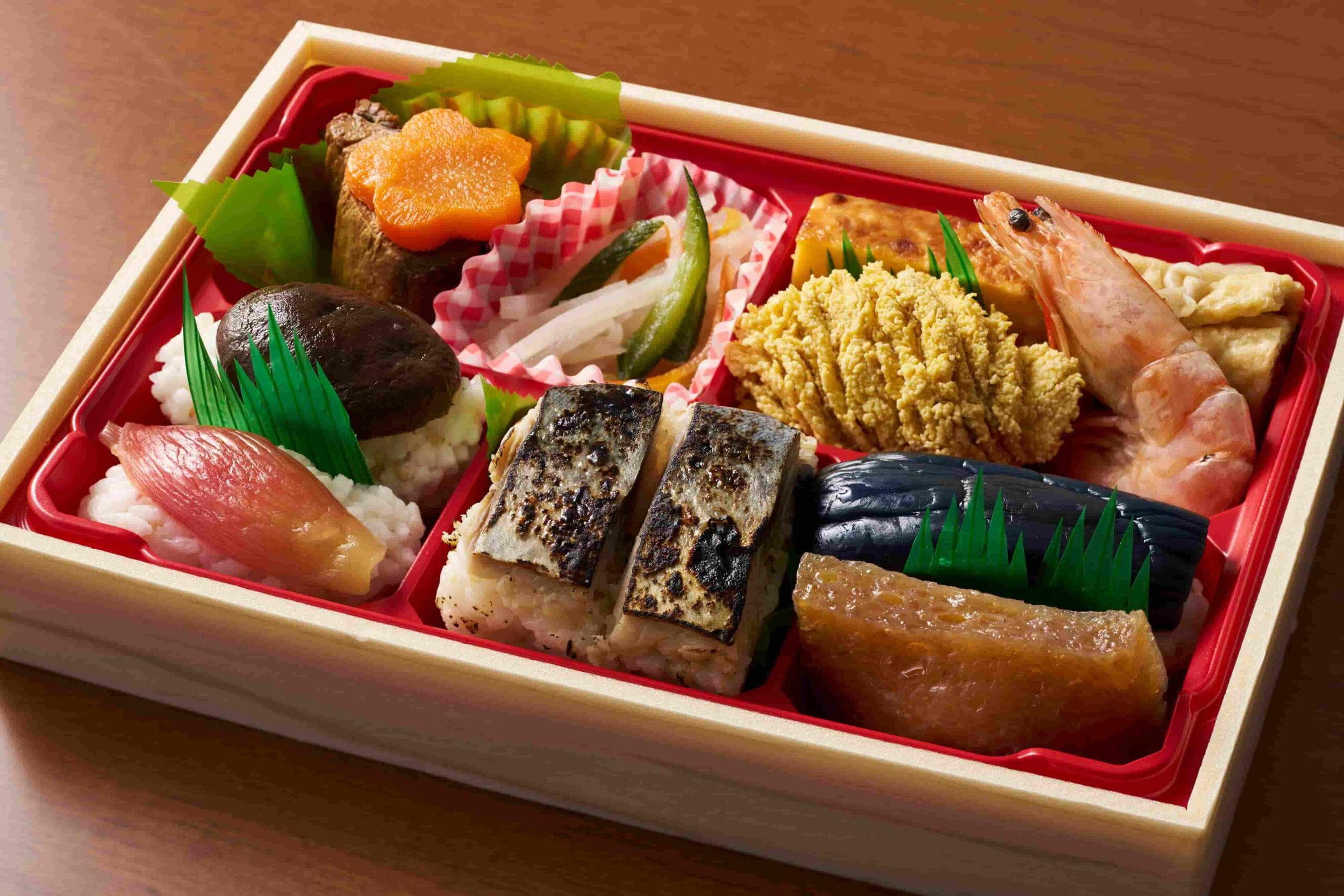
Makunouchi ekiben. An homage to its Kabuki theater origins, this variety box features a divided, geometric display of foods with a balanced color scheme (Kamekura et. al 7). This is the first type of ekiben I consumed when living in Japan. The organization of makunouchi bento is because Japanese consumers prefer to have all their takeout food in front of them at the same time, as there are no courses in home cooking (Noguchi 318). Photo courtesy of Gaho Japan.
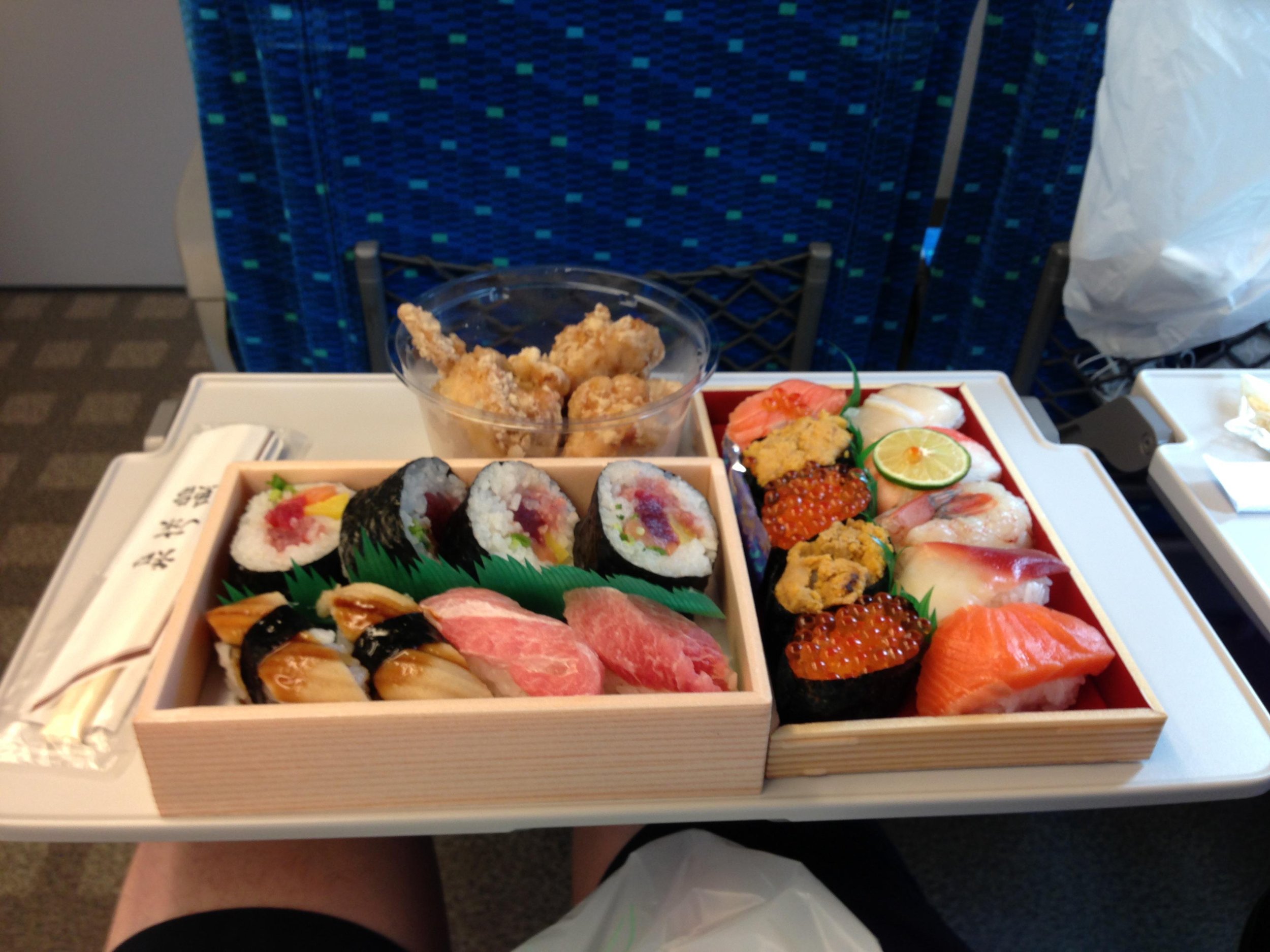
Sushi ekiben. It is exactly how it reads: different types of raw seafood—from sweet shrimp and mackerel to uni and goby to flying fish roe and eel—are folded, mixed, placed, wrapped, rolled or laid inside with rice. A majority of sushi bento represent centuries-old recipes from the Edo Period. Photo courtesy of /American-in-Japan-1.
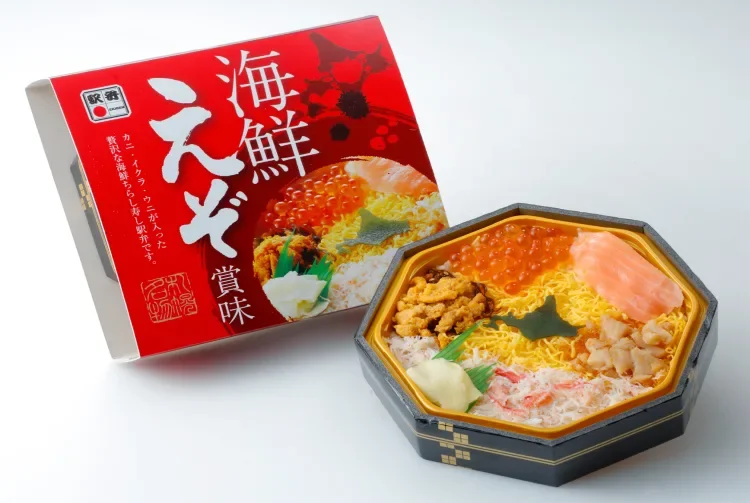
Gourmet ekiben. This genre includes a large range of bentos due to price, contents, packaging, and seasonality. For example, some deluxe ekiben have two or three tiers of dishes, while others are chirashi-filled octagonal bamboo boxes wrapped in ceremonial paper (Kamekura et al. 74). Photo courtesy of Japan National Tourism.
Kanetsu-shiki ekiben. Translating to self-heating or strings-attached bento, this modern ekiben allows train travelers to enjoy warm meat, rice, soups, or noodles. Most batched ekiben are cold and sit at city kiosks, while ekiben from smaller towns are freshly made. “Ekiben makers responded to complaints about their food being cold by creating ways to heat their products. These strategies include supplying a microwave oven at kiosks; using heated vending machines; and most notably, instant heat conduction units applied to individual lunch containers” (Hashimoto and Telfer 117).
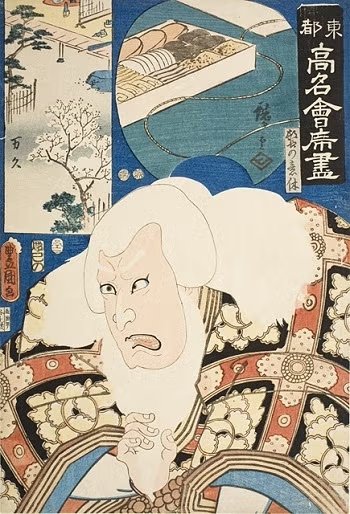
Figure 2.1 1852 portrait by Utagawa Kunisada (Toyokuni III) of Kabuki theater and the makunouchi bento served there. Courtesy of LACMA.
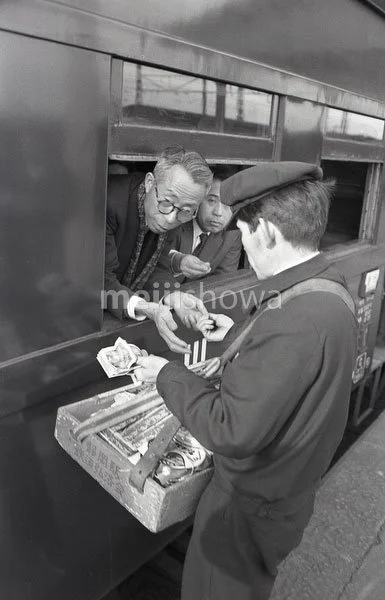
Figure 2.2 Ekiben vendor in at Nishiura Onsen, Aichi Prefecture in 1960. Courtesy of Khirin, accessed by Meiji Showa Agency.
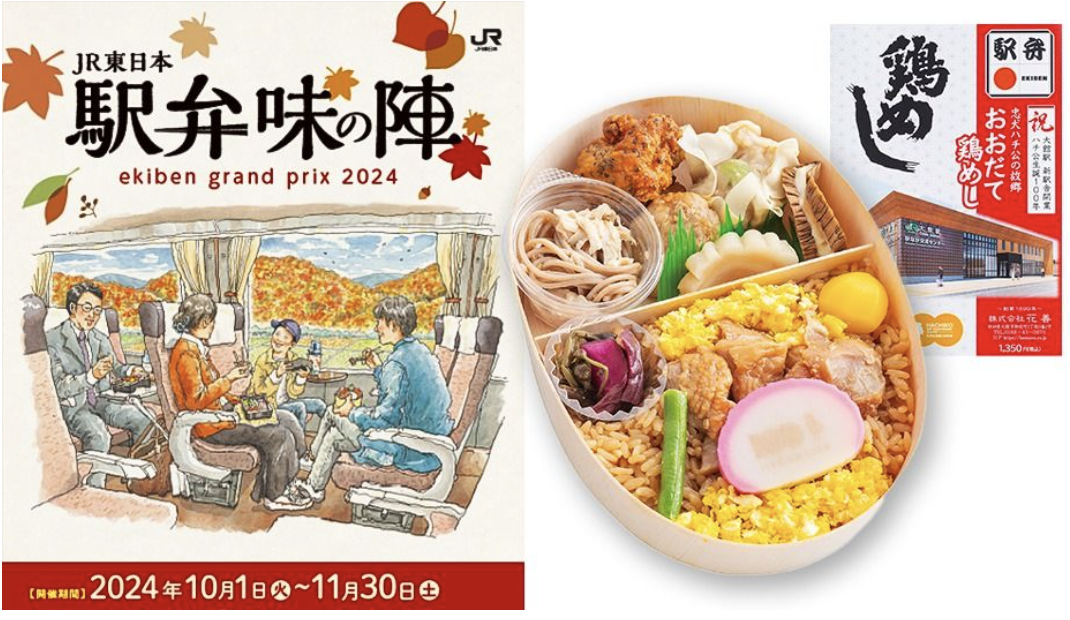
Figure 2.3 Promotional flyer of JR East’s 2024 Ekiben Grand Prix and an example of an ekiben available there. Courtesy of Nippon.com.
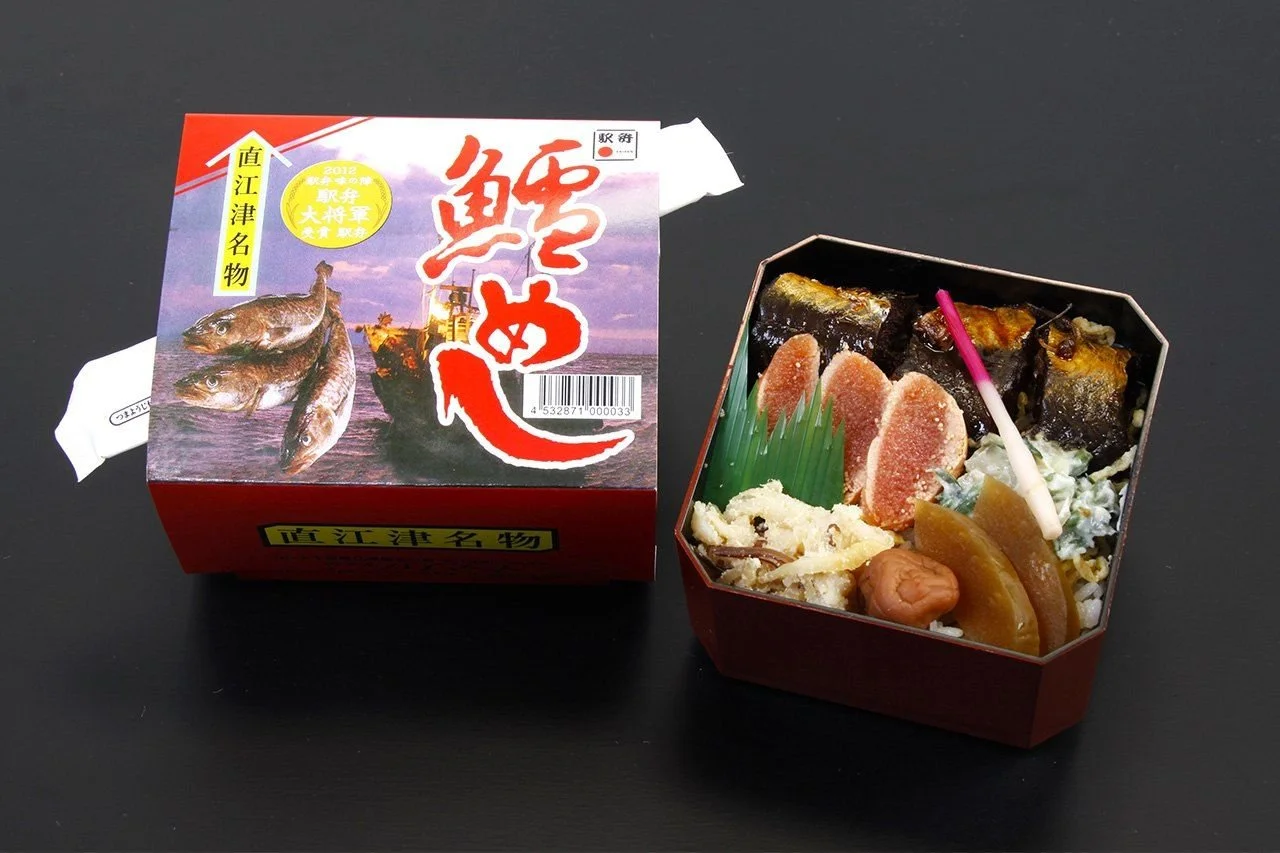
Figure 2.3 Hotel Heimat’s 2012 tara meshi ekiben. Courtesy of Hotel Heimat, accessed via Nippon.com.
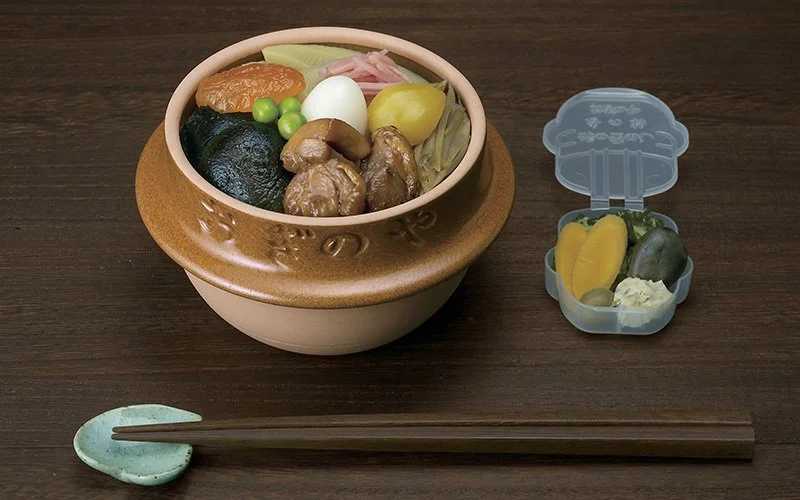
Figure 2.4 Toge no kamameshi ekiben of Annakaharuna Station in Gunma Prefecture. Courtesy of JR West.
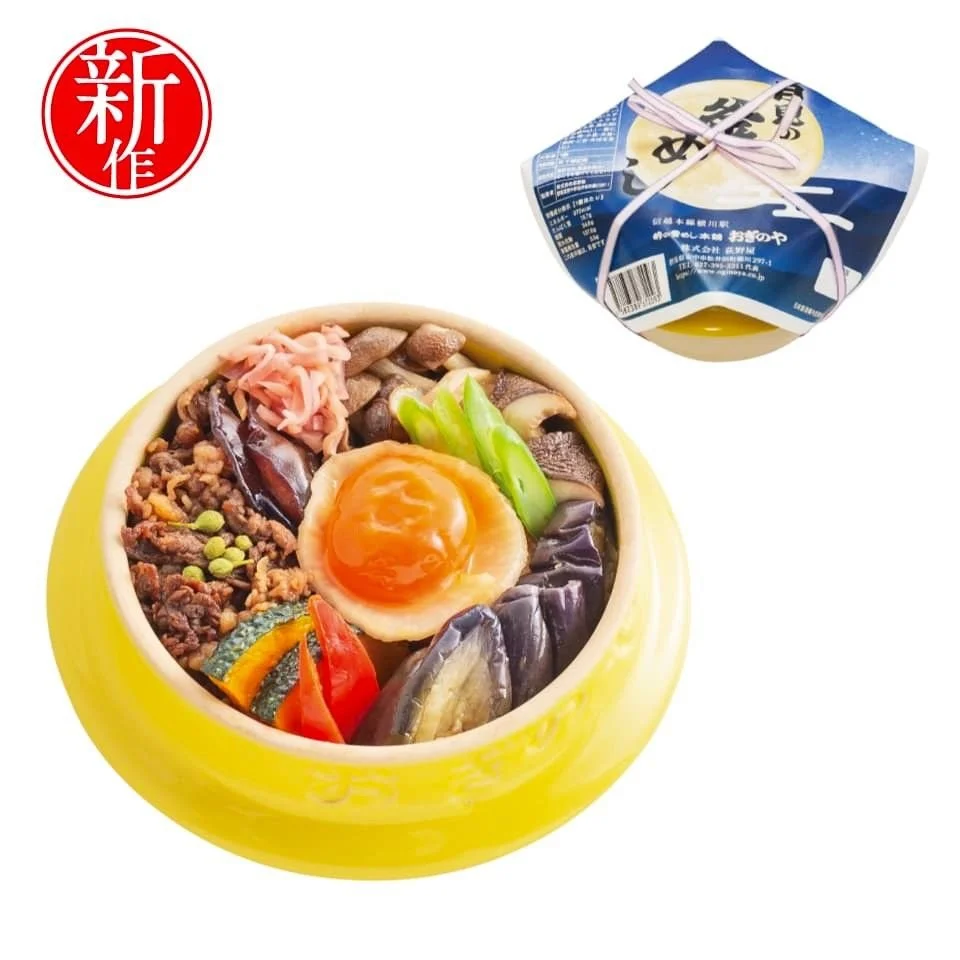
Figure 2.5 A style of toge no kamameshi ekiben by Oginawa. The egg yolk represents the full-moon viewing that draws tourists to the region in autumnal months. Courtesy of JR East, accessed by Nippon.com.
“Contemporary ekiben containers run the gamut from minimalist to witty. Within the boxes, several courses of a meal are typically accommodated. Sometimes their arrangement is sublime, understated, verging on the abstract. Sometimes, as in ekiben featuring such exotic comestibles as salmon row, sea urchin, and chicken shigure, the culinary architecture is cubistic.”
Bento Breakdown
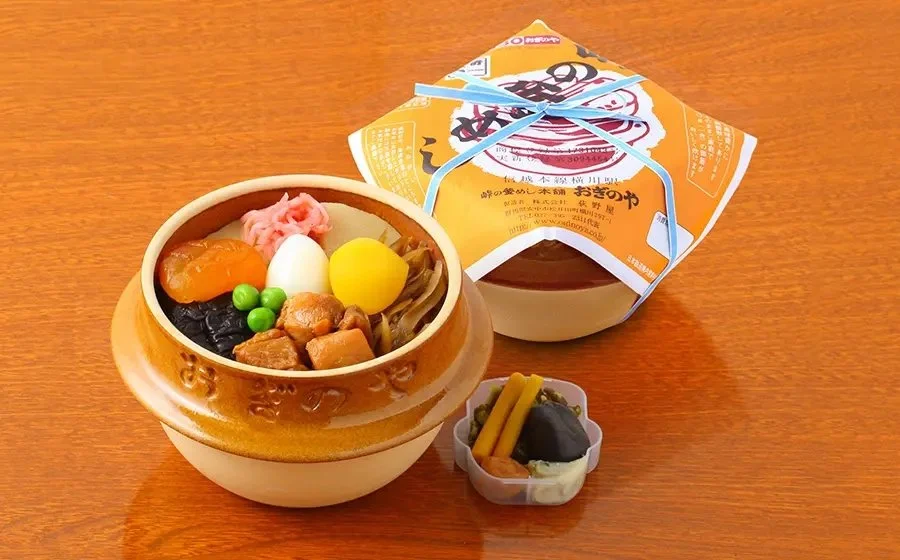
Kamameshi ekiben. Shrunken porcelain or ceramic pots filled with cooked rice and assorted ingredients. It is a specialty of Gunma Prefecture, northwest of Tokyo. Photo courtesy of Oginoya, a past honoree of JR’s Ekiben Grand Prix.
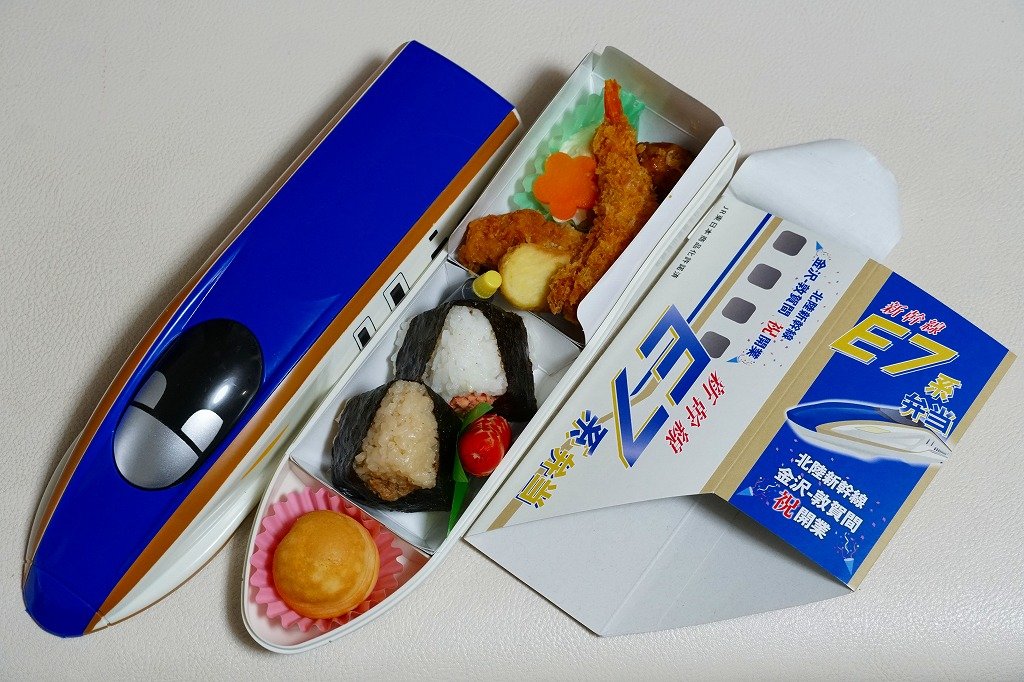
Novelty ekiben. A range of foods are packaged in containers shaped like the ingredients inside, flora and fauna, sports or kitchen equipment, paper lanterns, spiritual artifacts (including daruma dolls), and even shinkansen train models. The mains purposes of novelty packaging are promotion of tourism via souvenirs and limited-edition collectability. Photo courtesy of the online Ekiben Museum.
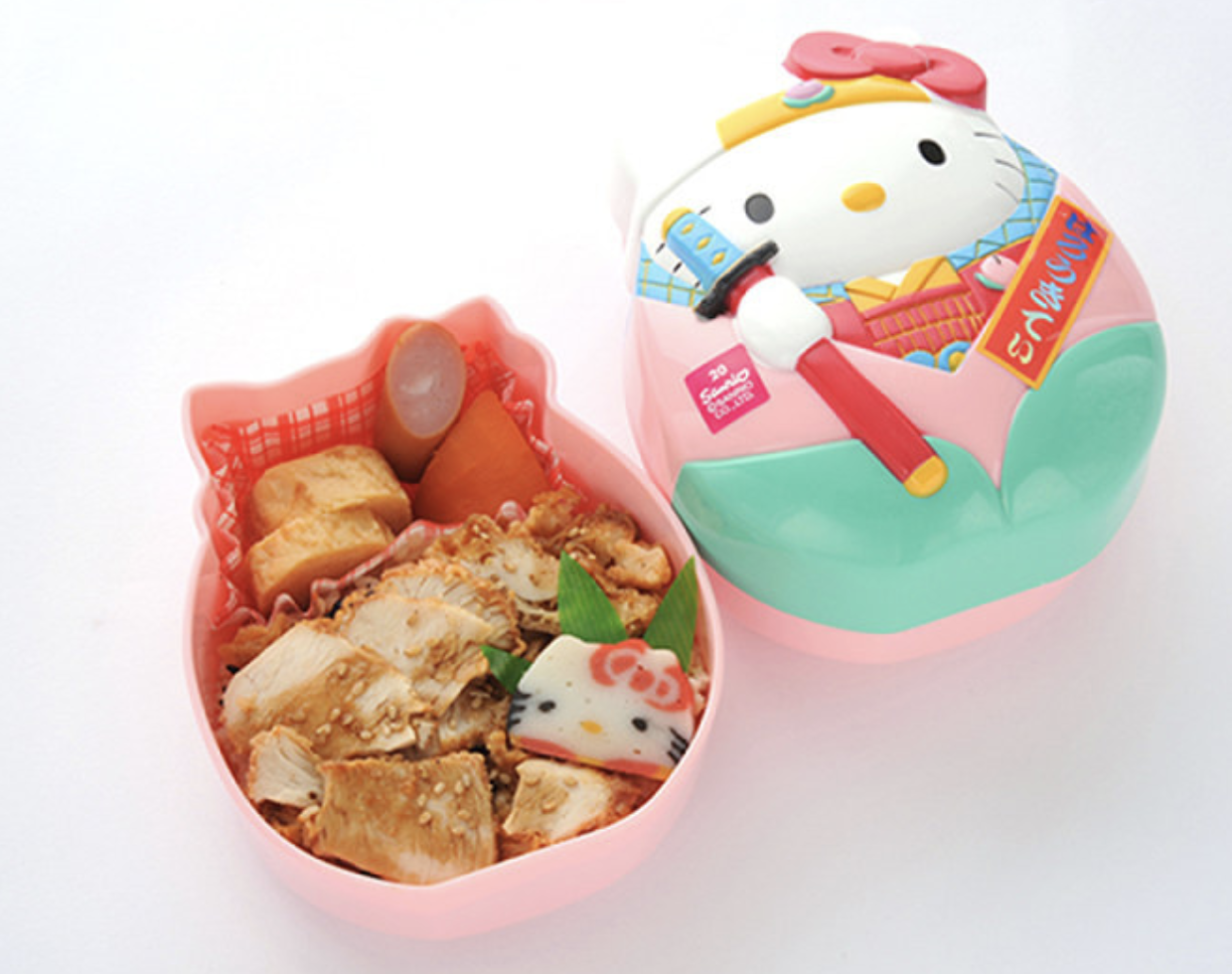
Kyara ekiben. Another form of novelty bento, this character-forward ekiben often highlights local heroes or folklore figures connected to the area, anime characters, local sports teams, or TV characters (Hashimoto and Telfer 117). Photo courtesy of Tetsudo Kaikan Company, accessed by The Mainichi.
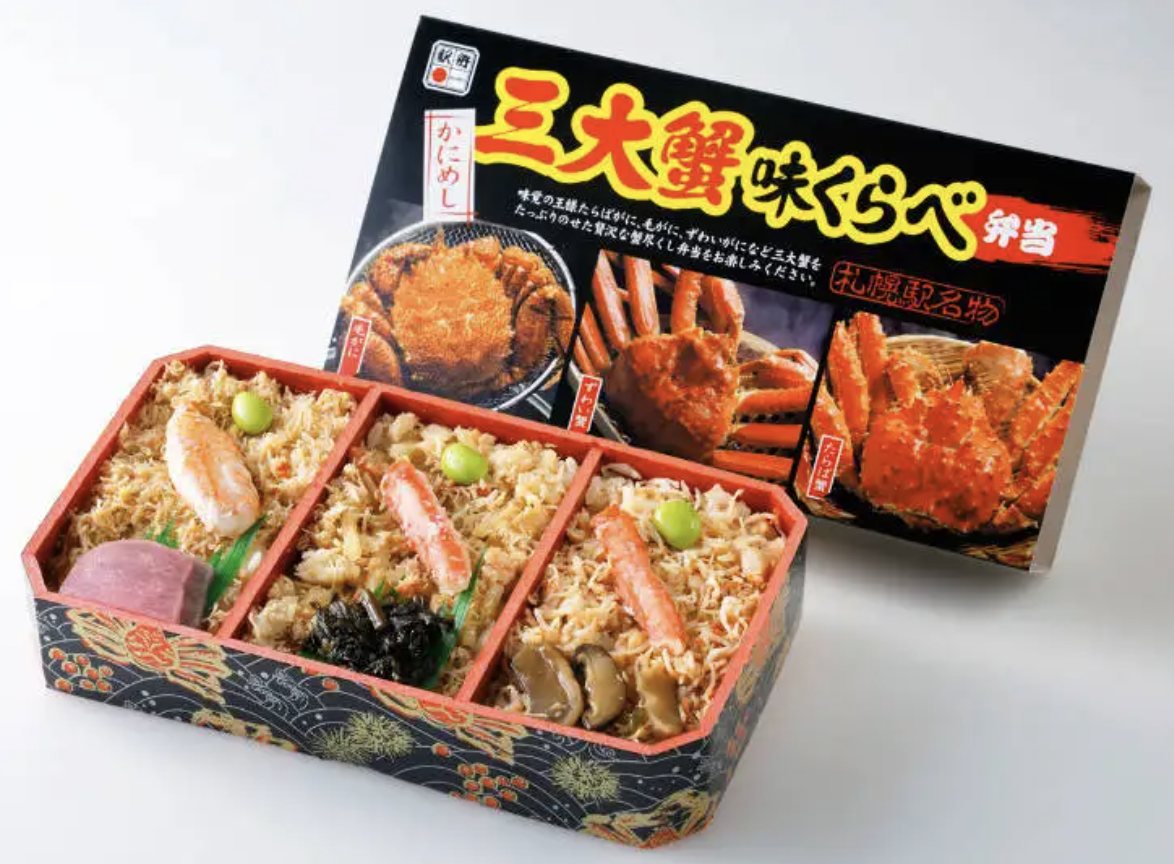
Shun no ekiben. Regionality is the focus of the next section, so I will not wax poetic here. But the most important aspect of ekiben are its one-of-a-kind, seasonal ingredients that you can often only find in specific cities—or even specific stations. Some regional ekiben are so seasonal you can only purchase them in select months. The inclusion of regional ingredients (such as rice, seafood, vegetables, soy sauce, salt, miso, lumber, textiles, and more) can promote the agriculture of certain prefectures, and this can include food products. Regionality goes beyond food, too: Some placed-based ekiben promote folklore, festivals, technological advancements, and landmarks of a prefecture. Photo courtesy of Live Japan.
It is merely impossible to describe the almost-infinite varieties of ekiben without dipping a toe into the importance of regional heritage and “one village, one product” practices. The final section will briefly explain how Japan has the means to offer of over 4,000 distinct ekiben—and how that reflects the significance of local foodways and pride. At large, the “Good Things Come in Small Packages” section aimed to underline how ekiben have the capacity to unite disparate phenomena and to condense objects (trains and train stations with boxed containers), relationships (people with each other and with regions), and ideas (people with time and nature), as Noguchi so aptly wrote (317).
The range of offerings here shows the juxtaposition of gastronomic heritage and modernizing society.